Space Health Research: Inside Ax-4’s Cancer in LEO-3 Study Investigating How Microgravity Affects Tumor Growth
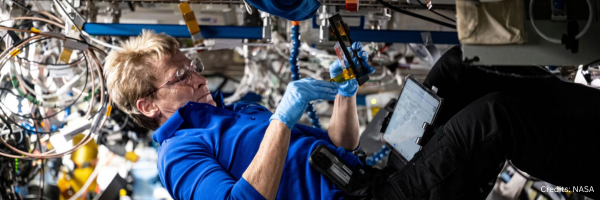
Imagine a world where studying cancer in space could help unlock new treatments on Earth.
The Cancer in LEO-3 experiment aboard Axiom Mission 4 (Ax-4) investigated triple-negative breast cancer organoids to understand how microgravity affects tumor growth, cellular behavior, and drug response. Conducted in low Earth orbit, Cancer in LEO-3 aims to provide insights that cannot be replicated on Earth and could guide both space health research and future cancer therapies.
TrialX’s space health systems provide the data infrastructure that can support studies like Cancer in LEO-3, enabling secure, remote data collection in space.
What is the Cancer in LEO-3 Study?
The Cancer in LEO-3 study was led by the Sanford Stem Cell Institute at UC San Diego in collaboration with Axiom Space, with support from NASA’s Human Research Program (HRP) and the Translational Research Institute for Space Health (TRISH).
Researchers used patient-derived tumor organoids — three-dimensional structures that mimic human tumors — to study:
- How microgravity affects tumor progression
- How cancer cells respond to investigational drugs like rebecsinib, targeting the ADAR1 gene linked to cancer growth and immune evasion
- Unique cellular changes that cannot be replicated on Earth
These insights may reveal new mechanisms of tumor growth, drug resistance, and therapy development for aggressive cancers such as triple-negative breast cancer (TNBC).
Why Triple-Negative Breast Cancer in Space?
Triple-negative breast cancer is among the most difficult cancers to treat. Unlike other breast cancers, TNBC lacks estrogen, progesterone, and HER2 receptors, making it resistant to many targeted therapies.
Studying TNBC in space provided several advantages:
- Identifying new biomarkers for drug response or resistance
- Observing changes in tumor growth and cellular architecture in microgravity
- Testing how investigational drugs like rebecsinib perform under stress conditions that mimic rapid progression
Microgravity alters cell signaling and growth patterns, creating a natural stress test that accelerates discoveries with potential applications for personalized medicine on Earth.
How Ax-4 Expanded Space Health Research
Ax-4 was more than a transport mission. It served as a mobile laboratory in low Earth orbit that supported multiple cancer studies. In addition to TNBC, the mission included research on secondary acute myeloid leukemia, metastatic ovarian cancer, and glioblastoma multiforme.
Key objectives of the mission included:
- Tracking cancer cell growth and gene expression in microgravity
- Testing investigational compounds in real time
- Generating high-fidelity biomedical data for both astronaut health and Earth-based oncology research
TrialX Space Health Systems: Enabling Space Health Research
TrialX Space Health Systems provide the data infrastructure that enables studies like Cancer in LEO-3. While not directly running this study, our platforms make decentralized space research possible in low-connectivity environments.
Building on work from previous missions and in partnership with TRISH, TrialX supported pre-flight, in-flight, and post-flight health research data collection for astronauts, including during the historic Ax-4 mission to the International Space Station.
EXPAND Database & Biorepository
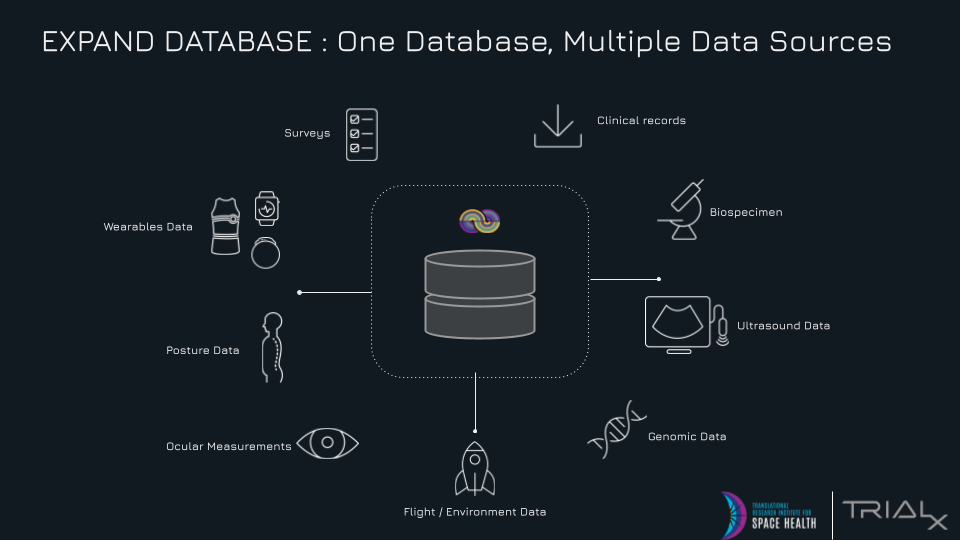
Developed in collaboration with TRISH, the EXPAND Database:
- Aggregates and curates biomedical and clinical data from multiple space missions
- Enables cross-mission comparisons and long-term tracking of astronaut health
- Curates datasets including wearable sensors, digital surveys, and biospecimen information
- Facilitates space medicine research and advanced astronaut health monitoring
HERMES Platform

TrialX was selected by TRISH in 2023 to develop HERMES, an autonomous, offline-capable health data collection platform that:
- Supports real-time or delayed syncing of wearable and digital assessment data
- Adapts for structured research protocols or routine health monitoring
- Enables testing and validation of interventions in analog environments on Earth
Supporting Health Research on Ax-4

During the Ax-4 mission, TrialX platforms enabled astronauts to collect surveys on TRISH Essential Measures, capturing physiological and experimental data using wearables such as BioIntellesense BioButton sensors and Garmin smartwatches. The data included heart rate and variability, blood oxygen levels (SpO₂), stress, step count, respiration rate, sleep patterns, and skin temperature.
All collected data was securely uploaded to the EXPAND Database and Biorepository, allowing researchers to study space health trends across missions. By providing this secure, scalable, and autonomous infrastructure, TrialX ensured that studies like Cancer in LEO-3 could generate actionable insights for both space health and terrestrial medicine.
Implications for Earth and Future Missions
The Cancer in LEO-3 experiment highlights the dual benefits of space health research:
- For Earth: Microgravity studies reveal novel therapeutic targets, drug responses, and biomarkers that improve cancer treatment
- For Space Exploration: Understanding how tumors behave in orbit supports astronaut health for future missions to the Moon and Mars
- For Personalized Medicine: Organoid studies may accelerate the development of tailored cancer therapies
- For Digital Infrastructure: Platforms like the EXPAND Database and HERMES raise the standard for secure, autonomous biomedical research in extreme environments
FAQs: Cancer in LEO-3 & Space Health Research
Q: What is the Cancer in LEO-3 experiment?
A: A space-based oncology study using tumor organoids to investigate cancer growth and drug response in microgravity, led by UC San Diego with Axiom Space and TRISH.
Q: Why use space for cancer research?
A: Microgravity alters how cells grow and interact, uncovering patterns that cannot be observed on Earth.
Q: What role does TrialX play?
A: TrialX powers the data platforms (EXPAND, HERMES) that enable decentralized biomedical research in space.
Q: How does this research help patients on Earth?
A: It may reveal new therapeutic targets and drug responses that improve treatment for aggressive cancers like triple-negative breast cancer.
The Cancer in LEO-3 experiment aboard Ax-4 represents a new chapter in space health research. Studying tumor biology in microgravity uncovered insights that could transform cancer treatment. At the same time, TrialX ensured that space health technology platforms captured and analyzed mission data securely and efficiently.These efforts demonstrate how oncology innovation and advanced digital infrastructure can shape the future of medicine, both in space and on Earth.
Explore how TrialX Space Health Systems can power your next space health research study.