What NASA’s First Medical Evacuation from the International Space Station Tells Us About Space Health Research
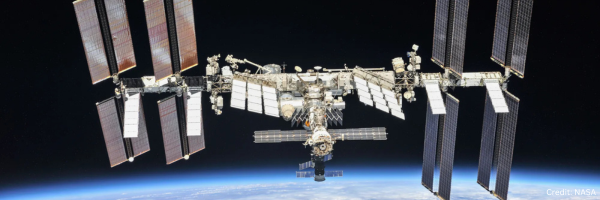
On January 8, 2026, NASA announced it would bring the four astronauts of its Crew-11 mission back to Earth earlier than planned. One crew member had developed a medical issue that could not be fully evaluated or treated aboard the International Space Station.
NASA emphasized that this was not an emergency. The astronaut was stable. The decision was made because the diagnostic and clinical capabilities required were not available in orbit.
Those details matter.
The International Space Station is one of the most advanced research platforms ever built, yet medicine in microgravity still operates with limits. Hardware is finite. Specialist access is delayed. Medical decisions often need to be made with incomplete information.
The decision highlights how medical outcomes in space are often shaped as much by data availability as by clinical assessment.
Where space medicine still runs into limits
Astronaut health is monitored continuously. Vital signs, imaging, cognitive performance, sleep, and other measures are tracked throughout missions. The challenge is not collecting data. It is ensuring that enough structured, longitudinal health data can be reviewed and interpreted with confidence when connectivity and clinical access are constrained.
In the Crew-11 case, NASA chose to reduce uncertainty by returning the crew to Earth. That choice reflects how medical risk is managed when diagnostic confidence cannot be fully established in orbit.
Similar constraints appear in remote research settings on Earth. When clinicians and researchers lack access to complete or continuous health data, decisions often default toward caution. Sometimes that is appropriate. In other cases, better data could support different outcomes.
How TrialX supports space health research
This reflects the type of challenges TrialX is working to address in space health research. Supporting remote, offline-capable health data collection, structured monitoring, and secure data transfer when diagnostic access, connectivity, and traditional clinical infrastructure are constrained.
At the research level, this requires systems that can support continuity, comparison, and long-term analysis across missions.
EXPAND Database & Biorepository
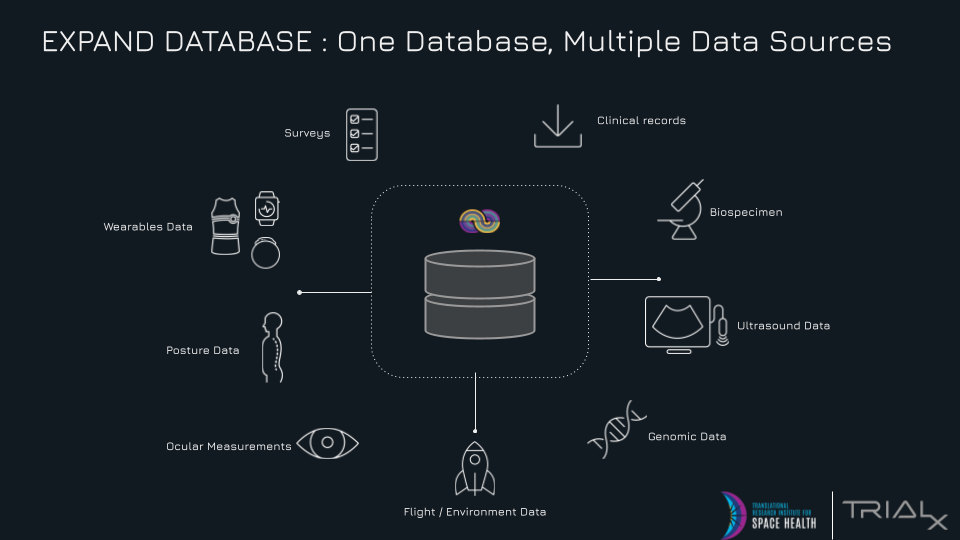
The EXPAND Database is designed to support longitudinal and cross-mission space health research. Developed in collaboration with the Translational Research Institute for Space Health (TRISH), EXPAND:
- Aggregates and curates biomedical and clinical data from multiple space missions
- Enables cross-mission comparisons and long-term tracking of astronaut health
- Supports research into cognitive performance, sleep, and behavioral adaptation
- Facilitates space medicine research and advanced astronaut health monitoring
While EXPAND focuses on aggregating and analyzing data over time, data still needs to be captured reliably at the source.
HERMES Platform
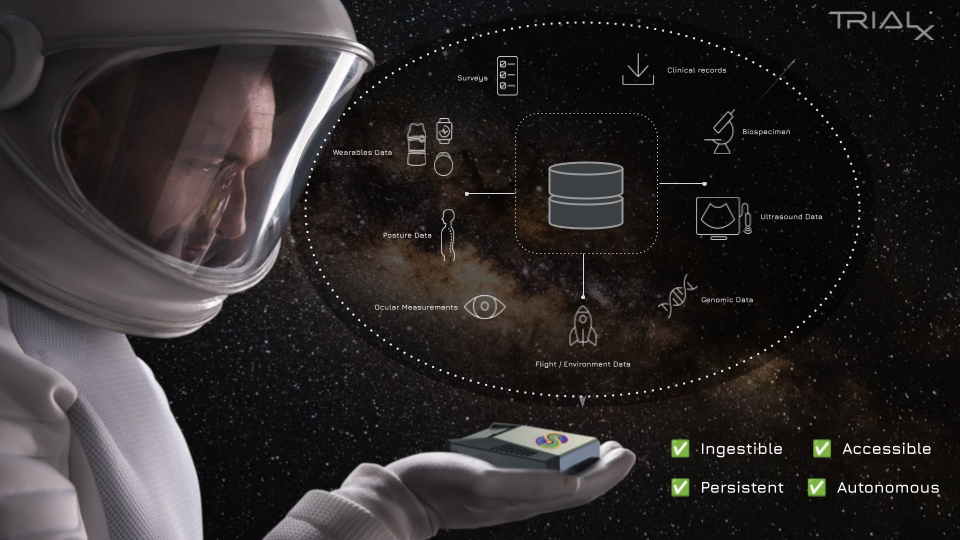
In 2023, TRISH selected TrialX to develop HERMES, an autonomous, offline-capable health data collection platform that:
- Supports real-time or delayed syncing of wearable and digital assessment data
- Adapts to structured research protocols or routine health monitoring
- Enables testing and validation of interventions in space-analog environments on Earth
Capabilities for Researchers
In space health research, where decisions may need to be made with limited diagnostic access, TrialX Space Health Systems enable researchers to::
- Capture and analyze longitudinal cognitive performance metrics
- Monitor emotional well-being and stress indicators over time
- Assess behavioral adaptation to isolation, confinement, and microgravity
Why this moment matters
The Crew-11 medical evacuation is an important moment for space health research.
It highlights where current medical and data systems reach their limits and where better health data infrastructure can make a difference. Improving how health data is captured, structured, and accessed will not remove risk from spaceflight, but it can reduce uncertainty.
In environments where decisions carry real consequences, reducing uncertainty matters.
See how TrialX supports space health research.