Leadership Spotlight: A Conversation with Lisa La Luna – Reflections on Diversity, Art, and the Future of Clinical Research
Throwback to October 13th!
We were honored to power the Clinical Trial Finder for the groundbreaking Reflections initiative, a program transforming how communities engage with clinical research. Designed to enhance diversity in clinical trials and raise awareness at the grassroots level through art, Reflections embodies a powerful fusion of creativity, empathy, and purpose.
Our team had an incredible experience at Reflections Atlanta, held on October 13th, 2024, in Downtown Atlanta—working closely with attendees to help them navigate clinical trials using our AI-powered tools that simplify complex trial information. The initiative continues to inspire visitors at BeReflected.org, where individuals can explore resources to support their journey toward trial participation.
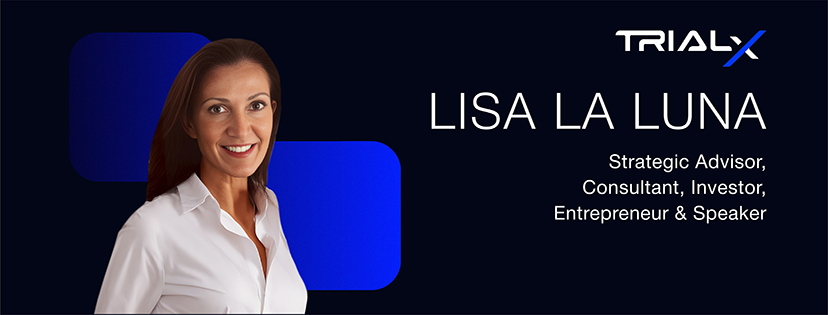
On the first anniversary of the Reflections Collective, we had the privilege of speaking with Lisa La Luna—a strategic advisor, investor, and entrepreneur whose remarkable 35-year career in clinical research continues to shape the future of patient engagement and innovation. A passionate advocate for advancing new therapies and a driving force behind the launch of Reflections – an initiative which won the Fierce DEI Award for community engagement and outreach – Lisa shares her insights on leadership, inclusion, and how art, technology, and community connection can redefine the landscape of clinical trials.
- You’ve been a part of the clinical research industry for over 35 years, working with leading organizations and founding several trailblazing companies. What initially drew you to this field—and what has kept you motivated through all these years
I always wanted to be a doctor. But during pre-med, as I shadowed physicians, I quickly realized the “art” of diagnosis—the thoughtful, investigative process of identifying the root cause of illness—was disappearing. Managed care was on the rise, and treatment decisions were increasingly dictated by insurance protocols rather than personalized clinical insight.
That was a pivotal moment for me. I realized that if I truly wanted to make a meaningful impact in healthcare, I needed to understand the systems shaping it. I pivoted toward business and clinical research. It wasn’t what I envisioned at first—but I committed to it wholeheartedly.
Over the next 35+ years, that decision proved invaluable. Today’s healthcare is dominated by formularies, PBMs, and reimbursement structures—and I’m grateful I chose a path that allowed me to challenge the status quo and help pioneer more patient-centered approaches. I’ve always been drawn to the cutting edge: emerging science, breakthrough technologies, and smarter ways to improve outcomes. Clinical research became the perfect platform to accelerate access to promising therapies and reimagine how care is delivered.
What’s kept me motivated all these years is simple: the patients. Knowing a trial extended someone’s life—or helped them live it more fully—is deeply fulfilling. Seeing patients not just survive, but thrive, because we kept pushing for better, more personalized solutions—that’s what fuels my passion every single day.
- What is the most rewarding part of your role in clinical research?
It’s the moment innovation becomes impact. When strategy, insight, and purpose unite to create solutions that truly change lives. Real transformation in healthcare isn’t easy. It demands persistence, behavioral change, clarity, and a deep understanding of what patients need—alongside honest reckoning with what organizations are truly willing to contribute.
Sometimes, it’s as simple as using the right technology—like AI—to connect the right patients to the right trials at the right time. And when that happens, the outcomes can be extraordinary.
The most fulfilling part? Witnessing someone live longer or better because of something we helped catalyze—whether it’s a platform, a protocol, or a shift in thinking. That’s when it all connects. That’s when it’s not just meaningful—it’s personally the most rewarding to me.
- What is the most challenging part of your role in clinical research?
Driving meaningful change in clinical research means working against legacy systems that inherently resist disruption. While implementation, change management, and behavior change are never easy, the deeper friction lies within the infrastructure itself—outdated processes, siloed stakeholders, duplicative vendor efforts, overlapping budgets, and layers of regulatory complexity.
Even though innovation has the potential to accelerate timelines, reduce costs, and improve outcomes, many organizations hesitate to invest. The perceived risk, upfront cost, and disruption to established workflows often outweigh the appetite for transformation. As a result, companies default to familiar systems—not because they’re effective, but because they’re already budgeted for and operationalized. Therefore, prohibiting the change that could really make a huge impact to connect patients to clinical trials and new medical therapies. Sadly, the patients lose.
Overcoming this inertia requires more than vision. It demands strategic alignment, cross-functional trust, and a clear business case for change. Innovation must be reframed not as an added cost, but as a catalyst for speed, efficiency, and impact.
That’s where real leadership comes in: navigating complexity, aligning stakeholders, and pushing the system forward when it’s easier to stand still. It’s difficult work—but when it succeeds, the results are exponential: better trials, better access, and better outcomes for patients. That’s what makes it all worthwhile—and what continues to inspire me every day.
- You’ve been an early and consistent voice championing diversity and inclusion in trials. You’ve been recognized with awards like the Microsoft Life Science Innovation Award and were also among the first PharmaVoice 100 honorees. Of all your milestones, is there one that stands out as especially meaningful?
Winning the DPHARM Disruptive Innovator Award—often referred to as the “Shark Tank” of clinical research—was a defining moment. It was only the second year the award existed, and to receive it from Glen de Vries, Co-Founder of Medidata and someone I deeply respected, made it all the more meaningful. At that very same time, we had just completed the sale of our company to WCG Clinical—a moment of both professional culmination and new beginnings.
Another experience that stands out was being invited to speak at TEDx Youth, where I had the privilege of sharing insights about clinical trials and the power of resilience in the face of adversity. As part of my talk, I introduced an interactive concept called the “MT Pharmacy” MT Pharmacy. The idea was simple but striking: an empty pharmacy, symbolizing a world without clinical trials. Attendees were invited to “fill the shelves” by writing on boxes the medications they hoped would one day be developed—and who they would be developed for (their parents, partners, and friends). Originally created by CISCRP in collaboration with Sanofi, I was honored to bring the MT Pharmacy to this event. The response was overwhelming. Participants of all ages engaged with the exhibit, and the space quickly filled with stories, hopes, and personal connections. It was a powerful reminder: without clinical trials, there are no therapies. AND, without connecting patients to clinical trials – clinical trials cannot be accomplished. The emotional resonance it created—left a lasting impact on me and the audience alike.
- Let’s talk about the Reflections project — Winning the Fierce DEI Award is a remarkable recognition. TrialX is honored to support the initiative with its AI-powered Clinical Trial Finder, helping individuals understand whether they’re represented in research. What makes this initiative so significant? And from your perspective, how can technology like this help bridge the gap and reduce barriers to clinical trial participation—especially for underrepresented communities?
The concept behind Reflections is to fundamentally disrupt the way we’ve historically recruited patients from underserved communities—by becoming part of the community first.
Reflections has invested significant time and energy into building a collaborative ecosystem in the Atlanta area, bringing together key stakeholders to expand access, increase education, and connect patients to clinical trials in meaningful, culturally aligned ways.
A vital part of this mission is the integration of TrialX iConnect, a smart, AI-powered platform that matches patients to the clinical trials best suited to their specific condition and geography. Its role is both practical and transformative:
- A) It offers an intuitive way for patients to discover trials that are geographically and medically relevant.
- B) It allows Reflections to track key touchpoints—whether the patient was eligible, if they met with the site, and how they heard about the study—ensuring visibility across the patient journey.
- C) It generates actionable metrics that are essential for making this model sustainable, scalable, and replicable in other regions.
- D) It serves as an educational tool, demystifying clinical trials and clearly explaining what participation entails.
- E) And perhaps most importantly, its AI-driven trial matching personalizes the experience—making it easier than ever for patients to find studies that truly fit their needs.
Together, Reflections and iConnect are not just improving recruitment—they’re redefining what equitable access to research looks like.
- The TrialX team was on-site in Downtown Atlanta at the launch of Reflections, excited to help attendees find trials that might be right for them. What do you think made Reflections resonate so deeply with the community? Can you share some memorable moments or interactions from the event that stuck with you? Any special takeaway from the experience?
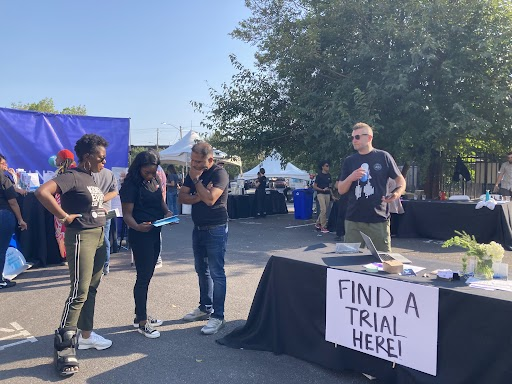
Survey responses revealed that what resonated most with patients was the opportunity to truly understand what clinical trials are—and what they mean for their health and their community.
The presence and presentations from local celebrities and clinical trial “heroes” played a powerful role in building trust. Their personal stories helped humanize research, break down misconceptions, and empower participants to share what they learned with family and friends. That sense of authenticity and connection was essential in turning awareness into advocacy.
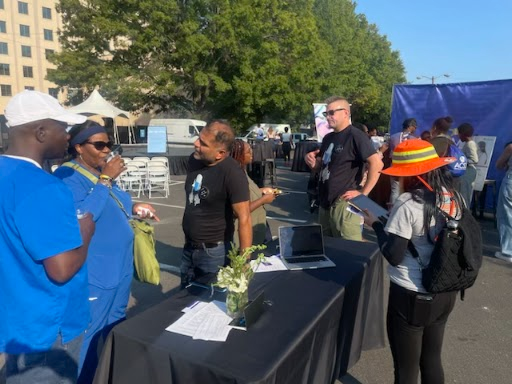
Several on-site elements contributed to the event’s success. The TrialX team provided real-time support, helping participants search for and match with clinical trials suited to their specific needs and locations. Having multiple Atlanta-based clinical trial sites on hand allowed attendees to ask questions, get personalized guidance, and feel supported at every step.
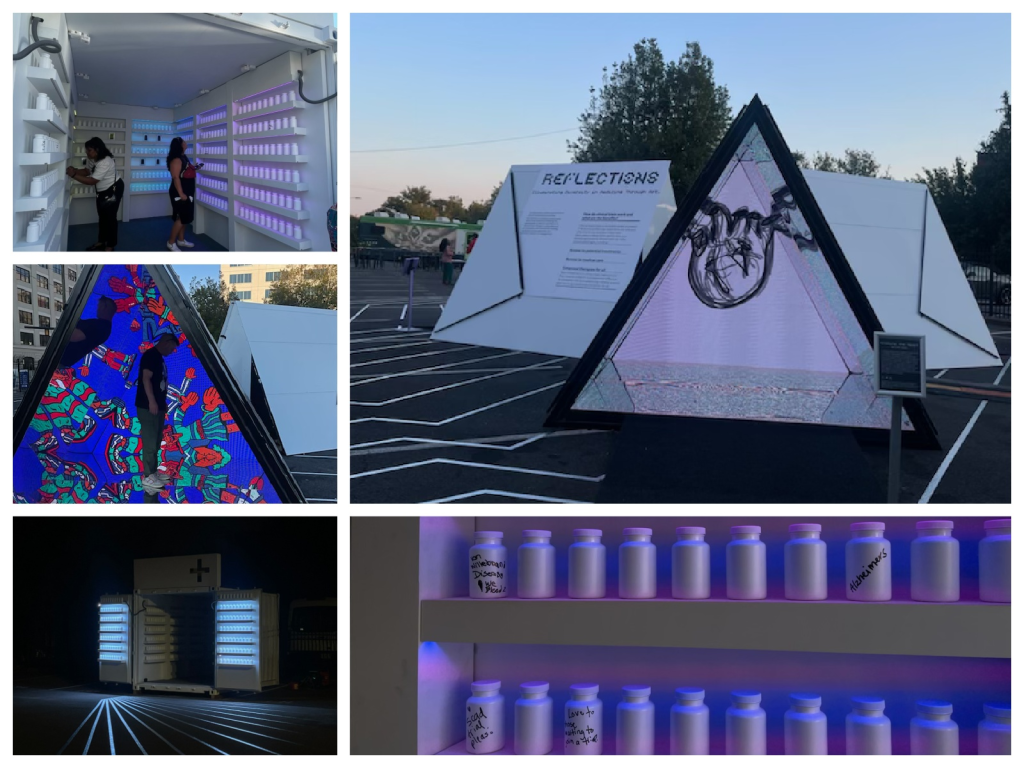
One of the most powerful moments came from the MT Pharmacy exhibit—a striking visual of an empty pharmacy with the message: “Without clinical trials, there are no therapies.” This simple but powerful display captured attention and made a lasting impact, helping attendees connect the dots between research, real-world access to treatment and the importance of participating in clinical trials to advance therapies for generations to come.
- You serve on numerous advisory boards and boards across the clinical research landscape, including impactful organizations like the Michael J. Fox Foundation. Looking ahead, what excites you most about the future of clinical research — whether it’s the push for more inclusive participation, the rise of AI, or the evolution toward decentralized and remote trials?
AI. AI is no longer a distant possibility—it’s a transformative force unfolding in real time. While apprehension is understandable, its presence is inevitable. The real question isn’t if AI will reshape healthcare, but how fast and how deeply it will impact every facet of the system.
At a recent global gathering of healthcare and AI leaders in Gstaad, Switzerland, I witnessed firsthand the acceleration of this shift. From AI-driven drug discovery to early models of the “AI physician,” the pace of innovation is staggering. Major players are already building the future—and the traditional clinical research process as we know will look entirely different.
But with this momentum comes responsibility. The true challenge will arise as AGI (artificial general intelligence) becomes a reality: we must ensure that technologies like Digital Genomic Intelligence (DGi) and other advanced systems decode biological complexity in ways that enhance — not replace — clinical wisdom.
Moreover, we must preserve a humanistic approach in the use of AI across society, anchoring innovation in ethics, empathy, and meaningful patient outcomes.
AI has the power to make healthcare more precise, personalized, and proactive than ever before. At a foundational level, the AI-powered trial matching feature within the TrialX iConnect system is already making it easier for patients to find clinical trials they’re likely to qualify for by securely leveraging their EMR data to identify the most relevant opportunities.
- If you had to reflect on one moment — a patient story, a project, or a turning point — that reminds you why you do this work, what would it be?
I’ll never forget a moment in Vail, Colorado. I was at a restaurant, casually waiting for a glass of wine, when a friendly woman beside me struck up a conversation. She asked what I did, and I proudly said I work in clinical research.
Within minutes, champagne was being served around the room. She stood and addressed the entire group within the restaurant: “I just want to thank this lady—she’s in clinical research. My 16-year-old daughter had cancer in her right femur. By the time it was discovered, it had spread, and the only choice was to amputate her leg – or go into a clinical trial. She took the chance and went into a clinical trial. Today our soccer team not only won the tournament, but she won MVP. She is alive and thriving because she was in a clinical trial. Thank you so much for all you do”’
In that instant, the true impact of our work became clear. I felt a rush of emotion—tears of gratitude and awe—as the heart of our work came into full view. Behind every plan, protocol, late night/weekend hours, there is a real person, a story, a life being forever changed.
9. What’s one quote or slogan that has stuck with you and continues to inspire your work?
I am a bit of a quote junkie so….apologies, but there are more than one that have shaped my inspiration. For instance, “If you always do what you always have done, you will always get what you always have got”. In other words, change requires action. Progress demands courage. And if we want different results, we have to be willing to think differently, work differently, and lead differently.
My personal mantra is “All In.” Whether it’s life or advancing clinical research, I believe in showing up fully—with purpose, resilience, and heart.
My Mother would tell you, I have had a quote in my hope chest since I was 12 that said, “I want to be very successful one day so I can help those who can’t help themselves”. That is still my north star.
My favorite movie has always been Pay It Forward. In it, a young boy is asked to come up with an idea to change the world. His idea is simple but profound: instead of paying someone back for a good deed, you “pay it forward”—helping three people, who help three more, and so on. One line from the film has always stayed with me:
“I guess it’s hard for people who are so used to things the way they are—even if they’re bad- they don’t change. Cause they kind of give up. And when they do, everybody kind of loses.”
— Trevor McKinney
That quote captures the heart of the story—and in many ways, the heart of what we face in healthcare and research. Change is hard. But giving up is harder—because when we give up, patients lose.
In a very personal way, I’ve always seen a parallel between Pay It Forward and the work we do in clinical research. If I can move the needle—even slightly—each day, I know I’m contributing to something far greater than myself. In this field, every small step has the potential to save lives. And the ripple effects of our efforts may extend farther than we’ll ever see.
10. Any other thoughts or messages you would like to add or share with the community?
There are days the setbacks seem endless. Then, something shifts. A breakthrough happens. A life is changed. And in that moment, it all makes sense again. The struggle was never wasted. It was the way forward for a better life for the patient, and for every life that follows.
Collaboration. Innovation. Purpose. Together, they’re unstoppable. Accelerating cures isn’t easy. It’s demanding. Uncertain. At times overwhelming. But it is also powerful – and profoundly worth it!
If you can look in the mirror and say, “I didn’t give up,”—that’s everything. Because someone, somewhere, is healed. Given a second chance. And when the first person is cured of an “incurable” disease, they won’t be just a name in a journal. They’ll be someone who participated in a clinical trial.
Most importantly,
to every clinical trial participant, thank you—for “paying it forward”. You are the ones that make the impossible, inevitable. Your courage lights the way—not just for yourself, but for generations to come.
Lisa La Luna’s story is a testament to purpose-driven leadership — where compassion, innovation, and perseverance converge to make research more human. Her unwavering belief that “the patient is always the reason” underscores every initiative she touches, from advancing technology-driven recruitment to empowering underrepresented voices through art and storytelling.
As Reflections Collective marks its first milestone, Lisa’s words remind us that true progress in clinical research begins when we dare to rethink, reconnect, and relentlessly pursue better outcomes for every patient.