Cross-Platform Ultrasound: Enabling Space Health Research and Remote Diagnostics across the Industry
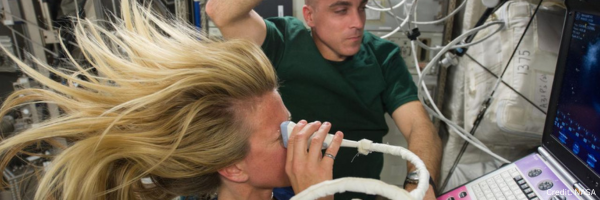
Healthcare in space is shaped by two realities: there are no hospitals in orbit, and crews must diagnose and monitor their own health with limited tools and no real-time support from Earth. As space agencies, commercial operators, and researchers prepare for longer missions, the demand for portable, reliable, and autonomous diagnostic systems has never been greater.
Ultrasound has emerged as a leading modality for space health research because of its portability and versatility. In environments where mass, power, and crew time are tightly constrained, ultrasound offers a single diagnostic tool that can be applied across multiple clinical scenarios with minimal setup. Building upon decades of research, the technology is increasingly maturing and ready for adoption across the industry, and made available wherever there is an EMT kit or medical crash cart.
Now, TrialX is seeking to lower barriers to adoption, by making the Butterfly iQ probe available across all major enterprise operating systems – iOS, Linux, and Windows. This cross-platform integration ensures that space health data collection and autonomous diagnostics are available to any organization – either in orbit and on Earth.
Why ultrasound is central to space health research
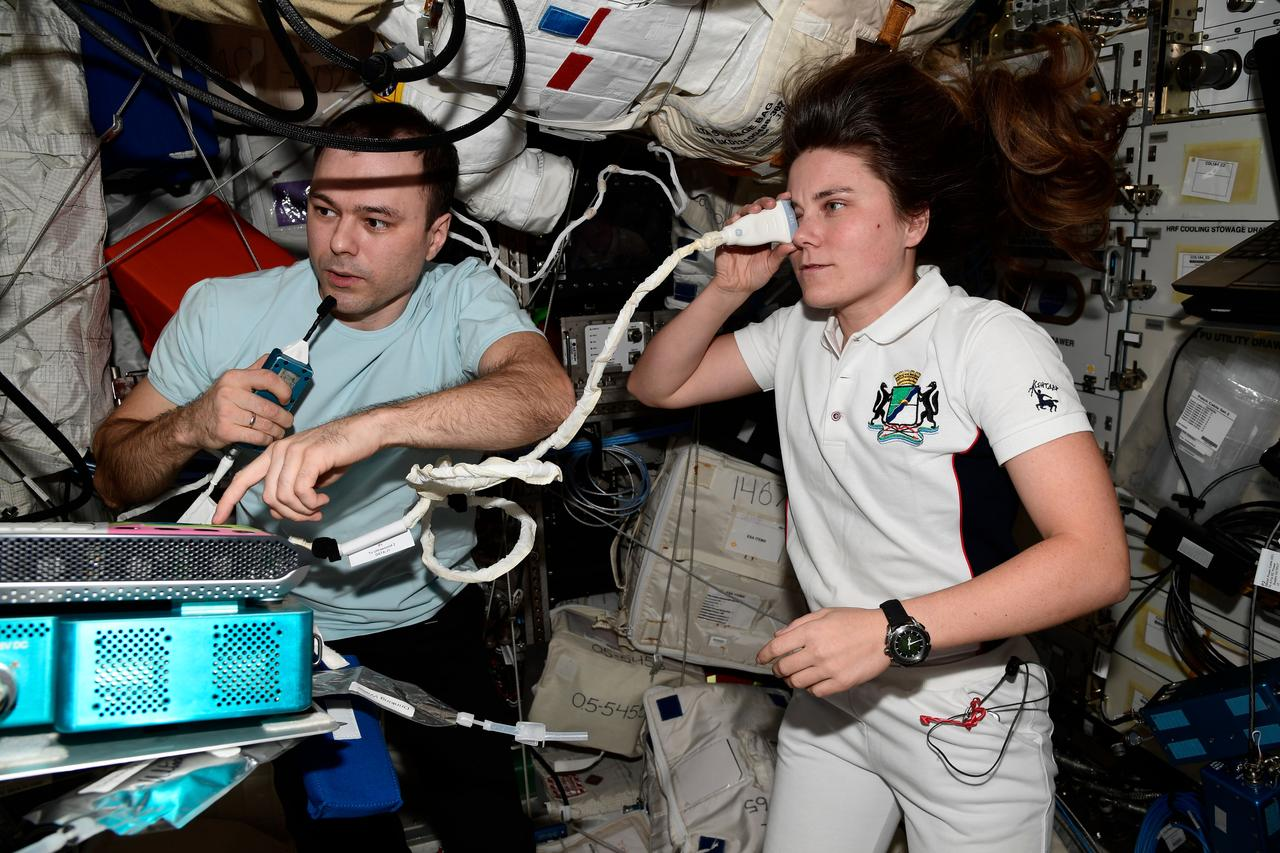
When traditional healthcare systems are distant and unavailable, the tools that remain available to the explorer or remotely situated community must be small, safe, and multifunctional. Diagnostic ultrasound checks all these boxes. During our recent webinar, Medicine Beyond Earth: How Imaging in Space Is Rewriting Remote Diagnostics, TrialX experts highlighted why ultrasound consistently outperforms other imaging modalities in space.
MRI and CT systems carry significant mass and power requirements that make them impractical for flight without dedicated modules. CT systems also rely on rotating components that can introduce mechanical instability in microgravity environments. CT and X-ray systems require careful management of gamma emission sources, which adds operational complexity in aerospace settings.
Ultrasound, by contrast, has emerged as a compelling modality because of its portability, minimal power requirements, and its ability to sufficiently capture a wide range of diagnostic views. These include cardiac, abdominal, musculoskeletal, vascular, and ocular imaging. While ultrasound is not the most precise modality in every scenario, its flexibility and multi-use nature make it well suited for environments where diagnostic breadth matters more than specialization.
Despite the unique challenges of imaging in microgravity, ultrasound has proven effective in spaceflight for more than 15 years. NASA’s Advanced Diagnostic Ultrasound in Microgravity program demonstrated that non-medical ISS crew members could acquire diagnostic-quality images with limited training, supported by remote guidance and well-designed protocols.
Antarctica: a real-world testbed for innovations in space healthcare

Space medicine often turns to Earth’s most extreme environments for insight. Antarctica is one of the highest-fidelity analogues for long-duration missions because it mirrors the psychological and physiological stressors astronauts experience.
As highlighted in our webinar, overwintering crews in Antarctica face prolonged isolation, reliance on technology for survival, and months without the possibility of evacuation. Dr. John Cherry of the Australian Antarctic Division noted that this environment closely parallels deep space conditions.
For this reason, Antarctica is more than a geographic extreme; it is a proving ground for medical workflows, hardware, and autonomous operations. Any diagnostic system meant for lunar or Mars missions must first be able to function in analogue environments like these.
Portable ultrasound devices, including Butterfly systems, have already been used extensively across harsh terrestrial environments. While specific Antarctic deployments vary, the parallels between Antarctic expeditions and spaceflight support the growing need for resilient, cross-platform imaging solutions.
Inspiration4 proved that handheld ultrasound works in orbit
The milestone moment for handheld ultrasound in space came during the Inspiration4 mission, the first all-civilian orbital flight. As outlined in the webinar, the crew operated the Butterfly iQ+ in flight and performed bladder, jugular vein, and ocular scans using only just-in-time digital instructions. There was no real-time support from Earth during these procedures.
This demonstration showed that:
- portable ultrasound is feasible for non-expert crews
- structured protocols can guide autonomous scanning
- image quality can reach diagnostic thresholds even in microgravity
The success of Inspiration4 marked a shift from experimental usage to operational potential, reinforcing the need for ultrasound systems that are accessible, adaptable, and platform independent.
The challenge: platform dependence in remote environments
Although the Butterfly iQ has transformed portable imaging, early versions of the system depended heavily on specific operating systems. The probe ran initially on iOS, and while a Linux SDK was later introduced, full flexibility across common field devices was still limited.
Space crews, remote researchers, and field medics frequently rely on ruggedized Windows laptops or Linux-based systems for data capture, mission operations, and instrumentation. If an ultrasound device cannot work reliably across these platforms, its deployment becomes restricted.
This gap, more than any hardware limitation, is what TrialX set out to solve.
Enabling Butterfly ultrasound across operating systems used in aerospace environments
Building on the Linux SDK, TrialX engineers extended Butterfly ultrasound support across all major operating systems commonly used in aerospace vehicles, habitats, and ground operations. This includes Windows, Linux, and mobile environments, ensuring imaging workflows remain consistent regardless of the computing platform available to a crew.
Rather than focusing solely on basic connectivity, the integration was designed with mission readiness in mind. This included:
- robust device detection and permission handling across operating systems
- reliable USB and firmware management suitable for mission-critical use
- an operator-friendly interface for acquiring and reviewing scans
- fully offline imaging workflows designed for disconnected and delayed-communication environments
With this work, TrialX becomes the only team enabling Butterfly ultrasound to function consistently across iOS, Linux, and Windows, aligning imaging capabilities with the operating systems most commonly deployed in aerospace, defense, and remote research environments.
Building upon the EXPAND Database and HERMES, the TrialX Space Health Systems allows biomedical data to be captured securely offline and synchronized seamlessly when communication links become available.
The result is a resilient, flexible, and mission-ready imaging system suitable for environments where connectivity is intermittent or nonexistent.
Why cross-platform ultrasound matters for the future of space health research
Space missions face significant constraints: communication delays, bandwidth limitations, radiation events, and highly variable operator skills. Ultrasound workflows must be able to operate autonomously and asynchronously.
TrialX uses an offline-first approach that stores imaging data locally and synchronizes when communication windows open, supported by FHIR-based data structures for consistency and research use.
Cross-platform support ensures that:
- crews can use whichever device is available
- imaging workflows remain uninterrupted even if one device fails
- field teams in analogue environments can test systems with their native hardware
- on-device AI models can run reliably across computing architectures
As space agencies prepare for lunar exploration and Mars missions, these capabilities are essential. The pathway to autonomous medical diagnostics begins with ensuring ultrasound can run anywhere, on any system, without dependence on Earth.
What this means for remote Earth environments

The same technologies that support astronauts also support clinicians and researchers working in extreme or underserved settings. From Antarctic stations to disaster zones to rural clinics with intermittent power and limited connectivity, cross-platform ultrasound improves reliability, reduces friction, and expands access to essential diagnostics.
Space medicine is no longer a niche field, but a blueprint for the future of decentralized, global healthcare.
Enabling Butterfly iQ to run across iOS, Linux, and Windows is more than a technical achievement. It represents the culmination of decades of research across industry, inter-organization collaboration, and the last mile to making this technology available across industries, whether they involve exploring deep space or expanding healthcare options in remote environments on Earth.
TrialX is proud to help build the imaging infrastructure that future explorers, researchers, and clinicians will depend on.
Watch the webinar – Medicine Beyond Earth: How Imaging in Space Is Rewriting Remote Diagnostics, where TrialX experts discuss ultrasound, autonomous imaging, and space health research in depth.