Clinical Trial Awareness: 5 Promising Pancreatic Cancer Clinical Trials That are Currently Recruiting Participants
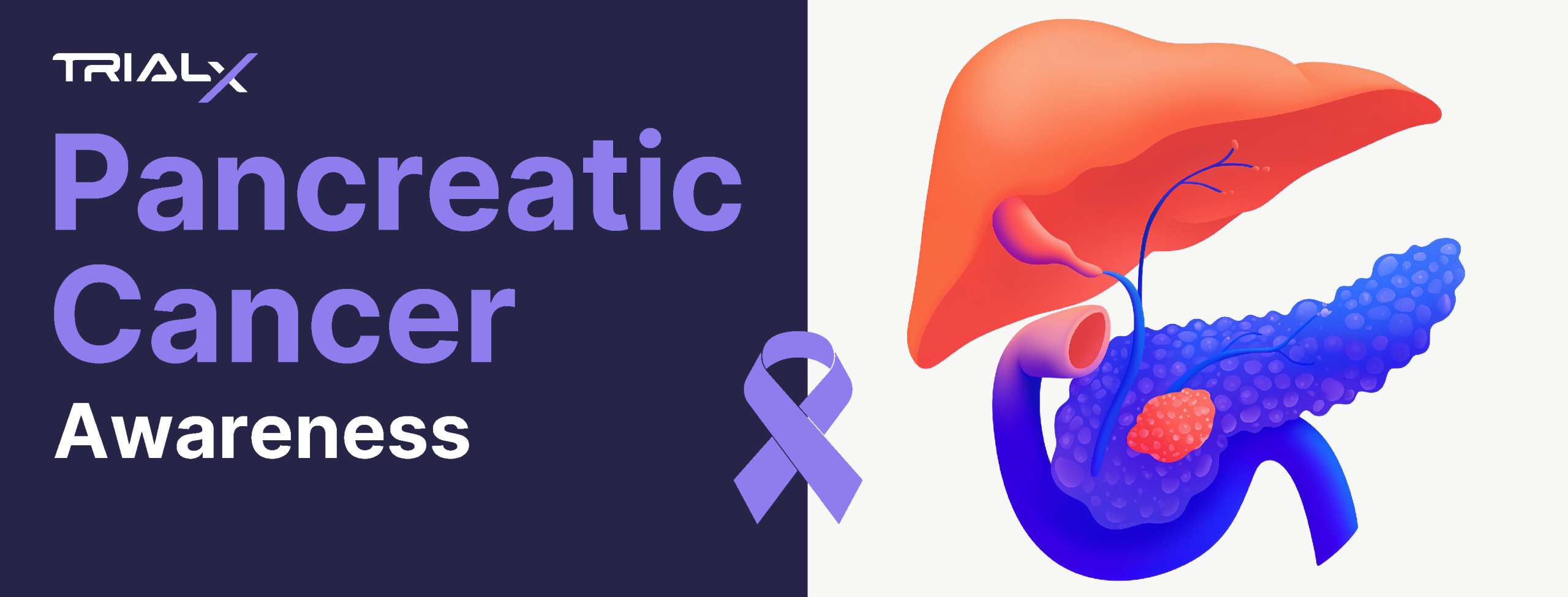
Pancreatic cancer is one of the most challenging cancers to diagnose and treat. Often called a “silent killer,” it rarely shows symptoms until it reaches an advanced stage — when treatment options become limited. Despite being only the 12th most common cancer worldwide, it is the 7th leading cause of cancer deaths, and in the U.S., it has already become the 3rd deadliest cancer.
The biggest obstacle is early detection. There is no standard screening test for the general population, and because the pancreas is located deep in the abdomen, tumors often grow without early warning signs. Symptoms like jaundice, abdominal pain, or unexplained weight loss typically appear later.
That’s why research and clinical trials are so vital. Every new breakthrough — whether in earlier detection, more precise treatments, or improved quality of life — begins with a clinical study. At TrialX, our mission is to help patients access these opportunities, connecting them with innovative research that brings hope where it’s needed most.
This November, under the “Shine a Light” theme for Pancreatic Cancer Awareness Month, we are spotlighting five actively recruiting clinical trials that offer promising advances — and the possibility of a brighter future for those affected by pancreatic cancer.
1. The CAPS5 Study: Screening Pancreatic Cancer in High-Risk Individuals
Sponsor: Johns Hopkins University
What It’s Testing and Why It Matters
The CAPS5 Study is focused on finding pancreatic cancer as early as possible in people who have a higher inherited risk. The study uses advanced tools such as MRI scans, endoscopic screening, and tumor marker testing (like CA19-9) to look for very early signs of pancreatic cancer — even before symptoms appear. By studying pancreatic fluid and blood samples, researchers aim to identify better early-detection biomarkers, which could help catch cancer years earlier than current methods allow.
Why It Stands Out
Pancreatic cancer is incredibly hard to detect early because the pancreas is hidden deep in the abdomen. For people who carry certain genetic mutations or have a strong family history, screening could be life-saving, as current screening tools are limited. CAPS5 is one of the largest and longest-running pancreatic cancer screening programs in the world.
What It Could Mean for Patients
If successful, CAPS5 could:
- Lead to earlier diagnosis, when survival rates are dramatically higher
- Enable personalized screening plans based on genetics and family history
- Improve the accuracy of tumor markers like CA19-9
- Reduce unnecessary procedures and anxiety for high-risk patients
Locations
Recruiting at 9 major cancer centers across the U.S.
Learn more about the study and check your eligibility here.
2. Adaptive Radiation Therapy for Locally Advanced Pancreatic Cancer
Sponsor: Fox Chase Cancer Center
What It’s Testing and Why It Matters
For many patients with pancreatic cancer, surgery isn’t an option because the tumor is too close to major blood vessels — a condition called locally advanced unresectable disease. Standard radiation can help, but nearby organs like the stomach and intestines limit how much radiation can safely be delivered.
This study is testing Adaptive Radiation Therapy (ART) — a highly personalized form of radiation that adjusts the treatment plan before each session based on imaging and tumor changes. The goal is to:
- Target the most aggressive tumor areas more accurately
- Protect healthy tissue around the pancreas
- Allow stronger, more effective radiation doses
Why It Stands Out
Unlike traditional radiation, ART recognizes that tumors shift slightly day-to-day due to digestion and breathing. This real-time adjustment could mean fewer side effects, better tumor control, and more patients are becoming eligible for surgery later.
What It Could Mean for Patients
If ART proves to be safe and effective, it has the potential to improve survival outcomes without increasing treatment-related toxicity, giving patients more options — especially when surgery is not possible. By advancing a more precisely targeted form of radiation, this approach could also pave the way for future breakthroughs.
Location
- Philadelphia, Pennsylvania, USA — Fox Chase Cancer Center
Learn more about this clinical trial here.
3. Acoustic Cluster Therapy (ACT) With Chemotherapy: A New Way to Target Pancreatic Tumors
Sponsor: EXACT Therapeutics AS
What It’s Testing and Why It Matters
This clinical trial is evaluating an innovative approach called Acoustic Cluster Therapy (ACT) alongside standard modified FOLFIRINOX chemotherapy for people with locally advanced pancreatic cancer. ACT works by using microbubbles filled with chemotherapy drugs. When ultrasound waves are applied to the tumor area, these microbubbles burst — releasing more of the medication exactly where it’s needed. Because pancreatic tumors are hard to access and often diagnosed late, improving how well treatment reaches the cancer could be game-changing.
Why It Stands Out
Instead of simply increasing chemotherapy strength, ACT enhances delivery directly to the tumor while reducing exposure to healthy tissue. This more precise targeting may help shrink tumors more effectively. Importantly, it could also increase the number of patients who qualify for surgery — currently the most promising path to long-term survival in pancreatic cancer.
What It Could Mean for Patients
A treatment that reaches the tumor more efficiently could improve response rates, expand therapy options, and offer new hope to patients who currently face very limited choices.
Locations
Arizona, Michigan, Pennsylvania, and Rhode Island (USA)
Learn more to find out if you may be eligible to participate.
4. A Targeted Therapy for KRAS G12C-Mutant Solid Tumors
Sponsor: Eli Lilly and Company
What It’s Testing and Why It Matters
This Phase 1/2 study is evaluating LY3537982, a targeted therapy designed specifically for cancers with the KRAS G12C mutation — including pancreatic cancer. KRAS mutations are among the most common drivers of tumor growth, but until recently, they were considered “undruggable.” This study will determine how well LY3537982 works alone or in combination with standard cancer treatments such as immunotherapy and chemotherapy.
Why It Stands Out
KRAS G12C is particularly aggressive in pancreatic cancer. By directly blocking the mutation that fuels tumor growth, LY3537982 aims to slow or control the disease when current treatments may stop working. It represents an important step toward precision medicine — where therapies are designed for a patient’s specific cancer profile.
What It Could Mean for Patients
If successful, this therapy could offer a more tailored option that targets the cancer at its source, potentially improving treatment response and disease management for individuals with KRAS G12C–mutated pancreatic cancer.
Locations
49 sites across the United States and internationally (including Canada, France, Australia, Japan, and South Korea)
Learn more to find out if you may be eligible.
5. BOLD-100 + FOLFOX: A New Treatment Approach for Advanced Gastrointestinal Cancers
Sponsor: Bold Therapeutics, Inc.
What It’s Testing and Why It Matters
This trial is testing BOLD-100 — a first-in-class therapy that works by interfering with a stress-response protein called GRP78, which cancer cells rely on to survive harsh conditions. By combining BOLD-100 with standard FOLFOX chemotherapy, researchers aim to make tumors more vulnerable to treatment. This is especially important for cancers like pancreatic, colorectal, gastric, and bile duct cancer, where resistance to therapy is common, and treatment choices are limited.
Why It Stands Out
Unlike many cancer drugs that target specific genetic mutations, BOLD-100 takes a broader approach. Its ruthenium-based design allows it to selectively disrupt cancer cell survival pathways while sparing most healthy cells. Because of this, BOLD-100 may work even when standard treatments stop being effective, opening the door for a wider group of patients to benefit.
What It Could Mean for Patients
For individuals whose cancer has spread or returned after previous treatment, this combination therapy may help slow disease progression, improve survival outcomes, and offer a better-tolerated treatment route.
Locations
Multiple sites across the U.S., Canada, Ireland, and South Korea.
Click here to learn more about eligibility.
Moving Research Forward
Progress against pancreatic cancer is possible because of the people who bravely participate in clinical studies. At TrialX, we’re dedicated to making clinical trial information easier to find so that more patients can access promising advances. Through partnerships like our work with Let’s Win Pancreatic Cancer, we’re helping bring AI-powered search tools directly to the communities that need them.
If you or someone you know is exploring treatment options or looking to support progress in pancreatic cancer research, explore trusted organizations such as the Pancreatic Cancer Action Network (PanCAN), the World Pancreatic Cancer Coalition, and the Hirshberg Foundation for Pancreatic Cancer Research. You can also visit TrialX.com to find trials near you or sign up for our volunteer registry to be notified about the latest advances in pancreatic cancer studies.