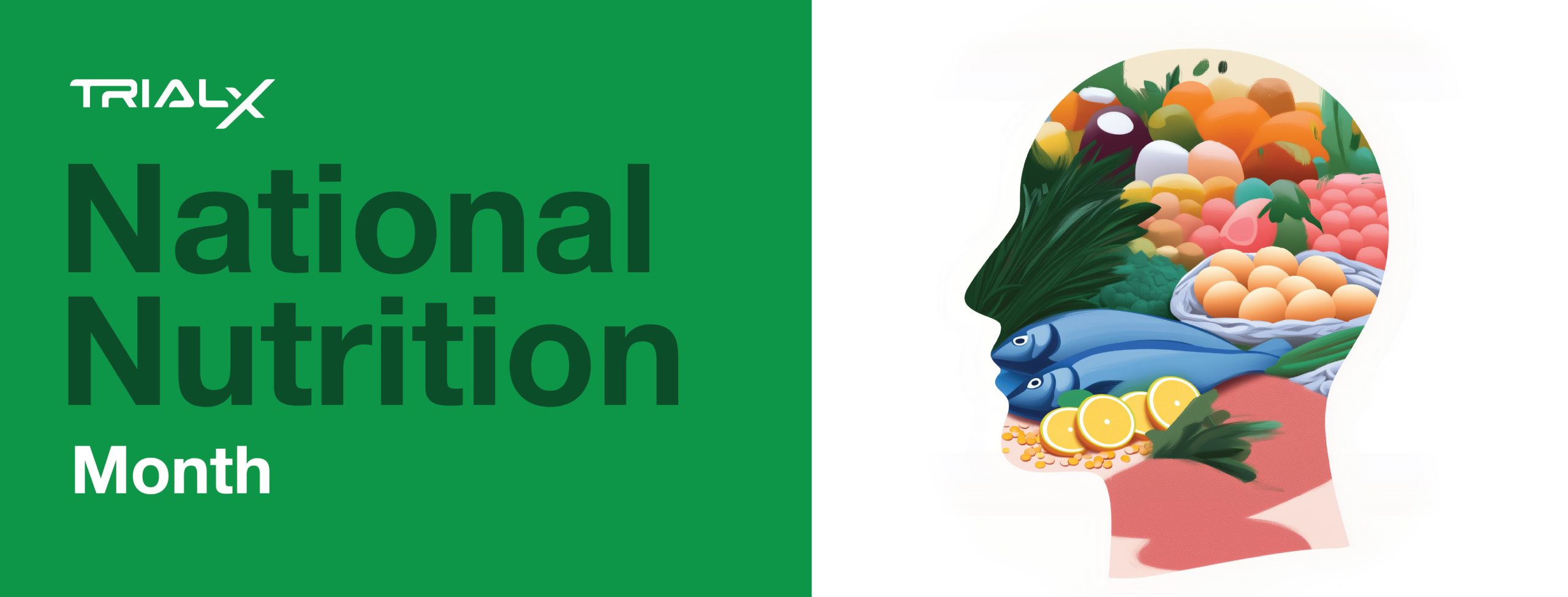
National Nutrition Month: 5 Ongoing Clinical Trials Shaping Nutrition Research
Nutrition plays an important role in overall health, but understanding what works best isn’t always straightforward. Diet-related factors are closely linked to conditions like type 2 diabetes, heart disease, and obesity, which affect millions of people worldwide. At the same time, nutrition advice varies, making it harder for people to decide what approach is right for them.
National Nutrition Month offers an opportunity to increase awareness around healthy eating and encourage more informed choices. Ongoing research plays a key role in this progress, helping explore how different dietary approaches, supplements, and lifestyle changes impact health. Clinical trials are an important part of this and also give people the option to participate in research. TrialX supports this by helping patients find and connect with relevant clinical trial opportunities based on their health condition.
In this blog, we highlight five nutrition-related clinical trials that are actively recruiting participants.
1. AI-Based Nutrition Counseling for Gestational Diabetes (AIM-GDM Study)
Sponsor: Montefiore Medical Center
What It’s Testing and Why It Matters
This study is evaluating whether AI-based counseling can support the management of gestational diabetes during pregnancy. Participants receive standard nutrition guidance, with one group also getting access to a GPT-based tool that provides real-time, personalized advice through a smartphone. The goal is to see if this added support can help improve blood sugar control and overall pregnancy outcomes.
Gestational diabetes affects around 6–9% of pregnancies and requires careful monitoring and dietary management. This study looks at whether AI can help make that support more consistent and accessible.
Why It Stands Out
The study combines traditional care with AI-driven guidance that patients can access anytime. It focuses on day-to-day support, which can be especially helpful between clinic visits. The randomized design also allows researchers to directly compare outcomes between standard care and AI-supported care.
What It Could Mean for Patients
If effective, this approach could:
- Make nutrition and diabetes guidance more accessible throughout pregnancy
- Support better day-to-day management without increasing clinic visits
- Offer a more personalized way to track and respond to changes
Locations
This study is recruiting in the United States, with participation based at Montefiore Medical Center in the Bronx, New York.
Learn more about the study and check your eligibility here.
2. Diet & Nutrition Experiences on GLP-1 Therapy
Sponsor: University of South Carolina
What It’s Testing and Why It Matters
This study looks at how people change their eating habits after starting GLP-1 therapy, a treatment commonly used for obesity and type 2 diabetes. While these medications are known to reduce appetite and food intake, there is limited guidance on how to maintain a balanced, nutritious diet while using them. Participants will share their experiences through surveys and food recalls over 12 weeks. Researchers will track changes in diet quality and weight to better understand what kind of nutrition support people may need while on this therapy.
Why It Stands Out
Instead of focusing only on how the medication works in the body, this study looks at real patient experiences—what people eat, what challenges they face, and what kind of support might help. It also focuses on the period right before and after starting the medication, which is often less studied.
What It Could Mean for Patients
Findings from this study could help shape clearer nutrition guidance for people using GLP-1 therapies, especially as these treatments become more common. It may also highlight gaps in current care and lead to more practical, day-to-day dietary support.
Locations
This study is recruiting in the United States, with sites in Columbia and Greenville, South Carolina.
Check if you might be eligible and learn more about the study here.
3. Nutrition for Precision Health Study – All of Us Program
Sponsor: RTI International
What It’s Testing and Why It Matters
This large-scale study is exploring how different people respond to different diets and whether those responses can be predicted using AI. Participants take part in different phases, including health assessments, wearable tracking, and, for some groups, following specific diets over time. Researchers then measure how the body responds after meals, looking at factors like blood sugar, insulin, and fats in the blood. The goal is to better understand why the same diet can affect people differently, and to use that data to build more personalized nutrition guidance.
Why It Stands Out
This is one of the larger nutrition studies, with up to 8,000 participants. It combines real-world data like daily habits and environment with detailed biological measurements. Some participants follow meal plans while living at home, while others take part in a more controlled setting, helping researchers compare both everyday and highly controlled conditions.
What It Could Mean for Patients
This study could help move nutrition away from one-size-fits-all advice toward more personalized recommendations. Over time, it may make it easier to understand which diets work best for different individuals, based on their biology and lifestyle.
Locations
This study is recruiting across multiple sites in the United States, including locations in California, Illinois, Louisiana, Massachusetts, North Carolina, and more.
Explore more about the study here.
4. High-Protein Nutrition Study for Type 2 Diabetes
Sponsor: Joslin Diabetes Center
What It’s Testing and Why It Matters
This study is evaluating whether a high-protein nutrition formula can help maintain or improve muscle mass in people with type 2 diabetes who are starting incretin-based treatments. These include commonly used GLP-1 and related medications such as semaglutide (Ozempic®, Wegovy®), tirzepatide (Mounjaro®, Zepbound®), and dulaglutide (Trulicity®).
Participants in the study group will include protein shakes as part of their routine, while another group will continue with standard diabetes care. While these medications are often linked to weight loss, this study focuses on understanding how to better support muscle mass during treatment.
Why It Stands Out
The study looks beyond weight changes and focuses on body composition, especially preserving lean muscle. It also explores a simple nutrition-based approach that can be added alongside existing treatment without major lifestyle changes.
What It Could Mean for Patients
The findings could help shape more balanced treatment plans by showing how targeted nutrition supports the body during weight loss. It may also offer practical guidance for people starting these medications who want to maintain strength and overall health.
Locations
This study is recruiting in the United States at the Joslin Diabetes Center in Boston, Massachusetts.
Check out more about the study here.
5. Nutrition & Exercise Prehabilitation Study for Cancer Patients
Sponsor: University of Arizona
What It’s Testing and Why It Matters
This study is looking at whether a short-term nutrition and exercise program before surgery can improve health markers in patients with obesity-related cancers. Over a 3-week period, participants follow a structured plan that includes dietary guidance, physical activity, and daily walnut intake. Researchers will measure changes in inflammatory biomarkers using blood and tissue samples collected before and after the program. These markers are linked to how the body responds to cancer and recovery from surgery.
Why It Stands Out
The study focuses on a “prehabilitation” approach—helping patients prepare for surgery in advance rather than only focusing on recovery afterward. It combines nutrition, exercise, and real-world tracking (like step counts and daily logs). The program is community-informed and includes supervised sessions along with at-home activities.
What It Could Mean for Patients
If successful, this study could:
- Show how lifestyle changes before surgery may support better outcomes
- Help improve physical readiness for surgery
- Provide simple, structured ways to support overall health during cancer care
Locations
This study is recruiting in the United States, with participation based at the University of Arizona Cancer Center in Tucson, Arizona.
Learn more about the study and check your eligibility here.
Supporting Better Health Through Nutrition Research
Clinical research continues to shape how we understand the role of diet in health and disease. As studies explore new approaches—from personalized nutrition to lifestyle interventions—they help build clearer, more practical guidance for everyday care.
If you’re interested in learning more about clinical trials, explore currently recruiting studies through TrialX or sign up to our volunteer registry to receive updates on studies that may be relevant to you.
For additional information and resources on nutrition and health, you can also visit organizations like the Academy of Nutrition and Dietetics, the World Health Organization, and the American Nutrition Association.